
Yearly Archives: 2015
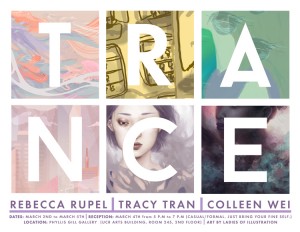
TRANCE-Rebecca Rupel, Tracy Tran and Colleen Wei
March 2, 2015 @ 5:00 pm – March 5, 2015 @ 7:00 pm, Phyllis Gill Gallery
The Provoke Era: Japanese Photography from the Collection of SFMOMA
February 28, 2015 @ 6:00 pm – 9:00 pm, California Museum of Photography
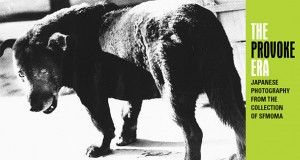 Named for the magazine Provoke, which sought to break the rules of traditional photography, this exhibition presents the avant-garde tradition that emerged in Tokyo in the 1960s and continued in the 70s and 80s. The exhibition traces Japanese photographers’ responses to their country’s shifting social and political atmosphere. The influence of Provoke photography in Japan continues today. The Provoke Era features work by internationally recognized artists including Masahisa Fukase, Eikoh Hosoe, Daido Moriyama, and Shomei Tomatsu.
The Provoke Era is organized by SFMOMA, and is curated by Sandra S. Phillips, SFMOMA senior curator of photography. The exhibition is made possible by The James Irvine Foundation, Bank of America, and The Japan Foundation.
Visiting Artist Lecture Series: Wong Ju
February 24, 2015
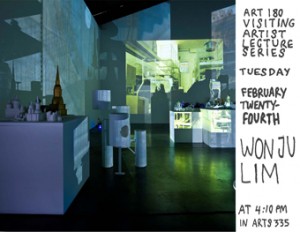 Wong Ju
Date/Time: Tuesday, at 4:10pm
Location: Arts 335
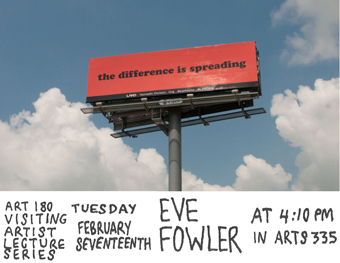
Visiting Artist Lecture Series: Eve Fowler
February 17, 2015
Eve Fowler
Date/Time: Tuesday, at 4:10pm
Location: Arts 335
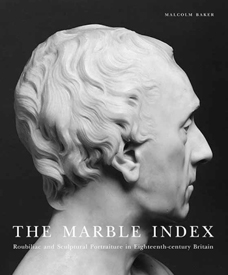 The Marble Index: Roubiliac and Sculptural Portraiture in Eighteenth-Century Britain
2015, New Haven and London: Yale University Press
Providing the first thorough study of sculptural portraiture in 18th-century Britain, this important book challenges both the idea that portrait necessarily implies painting and the assumption that Enlightenment thought is manifest chiefly in French art. By considering the bust and the statue as genres, Malcolm Baker, a leading sculpture scholar, addresses the question of how these seemingly traditional images developed into ambitious forms of representation within a culture in which many core concepts of modernity were being formed. The leading sculptor at this time in Britain was Louis Francois Roubiliac (1702–1762), and his portraits of major figures of the day, including Alexander Pope, Isaac Newton, and George Frederic Handel, are examined here in detail. Remarkable for their technical virtuosity and visual power, these images show how sculpture was increasingly being made for close and attentive viewing. The Marble Index eloquently establishes that the heightened aesthetic ambition of the sculptural portrait was intimately linked with the way in which it could engage viewers familiar with Enlightenment notions of perception and selfhood.