
Retired CHASS History of Art Professor Funds New Student Research Travel Grant
The Françoise Forster-Hahn Graduate Travel Award will help students with art research in other countries

Studio and archive of Paul Bruscky, Brazil
UCR’s Department of the History of Art has created a new student research travel grant. Started in 2021, the Françoise Forster-Hahn Graduate Travel Award will allow students to extend their research experience outside of campus and fund their trips to research to any country.
The grant is sponsored by a former UCR History of Art professor, Françoise Forster-Hahn, who retired after 35 years of instruction and research. Forster-Hahn taught 19th and 20th century European art history and helped establish the UCR/California Museum of Photography in Riverside. In the past, Forster-Hahn also made contributions to the Richard G. Carrott Travel Award, which supports one History of Art graduate or undergraduate student to travel.

Françoise Forster-Hahn
“I always felt that it was essential if you do study the visual arts, that you go and actually look at what you study,” Forster-Hahn said. “I encourage students to study culture in general and become knowledgeable about other countries, cultures, and languages.
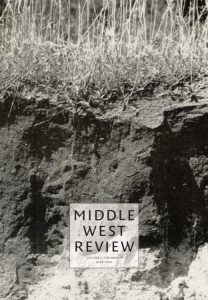 With great pleasure, the John E. Miller Prize Committee announces the winner of the 2020 prize for best article or essay to appear in the journal Middle West Review during the 2020 calendar year. Narrowing down the field of contenders to one top choice was daunting, given the high quality of scholarship and intriguing arguments present in all the articles under consideration. Jason Weems’ contribution, “Holding the Soil: A Note on the Conservation of Midwesternness,” went beyond those parameters, however. Weems, an art historian, employs innovative sources to arrive at a nuanced analysis about the widespread notion of midwestern identity as being rooted in the soil. Weems employs the most common depictions of midwestern landscapes in the 19th century, plat books, to identify midwestern identity of the time as resting on widespread availability of land rather than on the soil itself. Weems posits this as an economic relationship in which short-term exploitation of the soil was a far more typical experience of Midwesterners than long-term attachment. This “frontier mentality,” as Weems describes it, lasted only as long as the frontier itself. Subsequent generations of Midwesterners looked upon the landscape with different eyes. Weems argues that “it is probably no coincidence that Midwesterners became aware of the eroding status of their landscape in the same moment that they also saw the need to reorient regional identity.” (p. 132) The signature Midwestern trait of rootedness to the soil, Weems explains, came from second-generation residents who abandoned their frontier mentality – a horizontal orientation – for a deeper, vertical rootedness in place. Weems contrasts the horizontal plat book images, which appeal to the eye but also to the economic value of the land, with vertical photographs of the soil taken in the 1930s, showing soil depth and health, agricultural potential, but also fragility. The John E. Miller Prize Committee deemed Weems’ analysis a substantial contribution to the historical understanding of midwestern identity formation and proudly bestows the 2020 Prize on Jason Weems’ Fall 2020 article, “Holding the Soil.”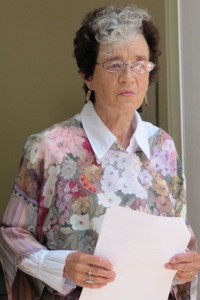
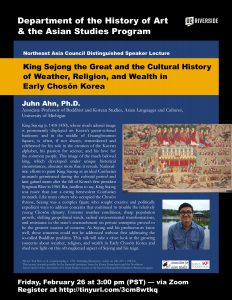 Juhn Ahn Ph.D.
 Dr. Jeanette Kohl