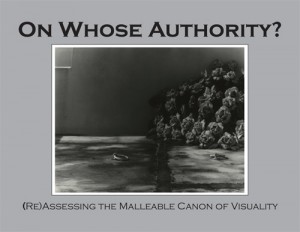
4th Annual Graduate Student Conference: On Whose Authority? (Re)Assessing the Malleable Canon of Visuality
Minor White, American, 1908-1976, Cemetery, Ponce Puerto Rico, 1973, Gelatin silver print, 14in x 11in, California Museum of Photography, gift of James Haddad (1982 0039 0002) , Reproduced with permission of the Minor White Archive, Princeton University Art Museum (MWA 73-16), © Trustees of Princeton University
Dr. Rafael Cardoso, Keynote
2014 – 15 Getty Research Institute Scholar
Professor, Universidade do Estadodo Rio de Janiero
Although the term canon implies rigidity, internal and external pressures have often forced canons to be reevaluated and reformed. A look at art and objects a global scale, from past to present, inevitably reveals the complexity as well as the exclusionary equality of canonicity. As such, a canon can be shown to have a malleable nature, one that yields or resists challenges to authority. Because the concept of a canon in relation to visuality permeates a wide variety of disciples, this multidisciplinary conference seeks explore the relationship between canonicity and the arts, in any of its forms, within an expanding global context.
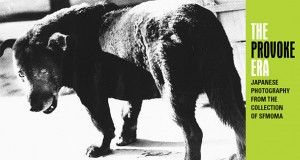 Named for the magazine Provoke, which sought to break the rules of traditional photography, this exhibition presents the avant-garde tradition that emerged in Tokyo in the 1960s and continued in the 70s and 80s. The exhibition traces Japanese photographers’ responses to their country’s shifting social and political atmosphere. The influence of Provoke photography in Japan continues today. The Provoke Era features work by internationally recognized artists including Masahisa Fukase, Eikoh Hosoe, Daido Moriyama, and Shomei Tomatsu.
 Wong Ju